Engineering Alpha
through Mathematics.
Bridging the gap between mathematical theory and algorithmic execution. Currently focused on high-frequency market making, risk modeling, and stochastic calculus.

Quantitative
Journey
"My journey into quantitative engineering began at the intersection of finance and math. Coming from a family with a background in the finance industry and a rigorous academic foundation, I was fascinated by how mathematical abstractions can govern chaotic market dynamics. Since then, I have dedicated my academic and personal projects to building robust algorithmic frameworks."
With a foundation in pure mathematics and a passion for high-performance computing, I specialize in developing C++ based execution engines and Python-driven research pipelines. I believe that true alpha is found in the rigorous application of the scientific method to financial data, seeking out market inefficiencies through statistical precision and technological speed.
Market Making, Statistical Arbitrage, & High-Frequency Trading.
Code is the medium, mathematics is the message.
Specialized Expertise
Quantitative Research
Alpha signal extraction, backtesting frameworks, and statistical arbitrage strategies.
Algorithmic Execution
High-frequency order management and low-latency execution engines.
Risk Management
Monte Carlo VaR engines, dynamic hedging, and real-time exposure monitoring.
Data Engineering
Architecting pipelines for tick data ingestion and distributed computing.
Featured Models
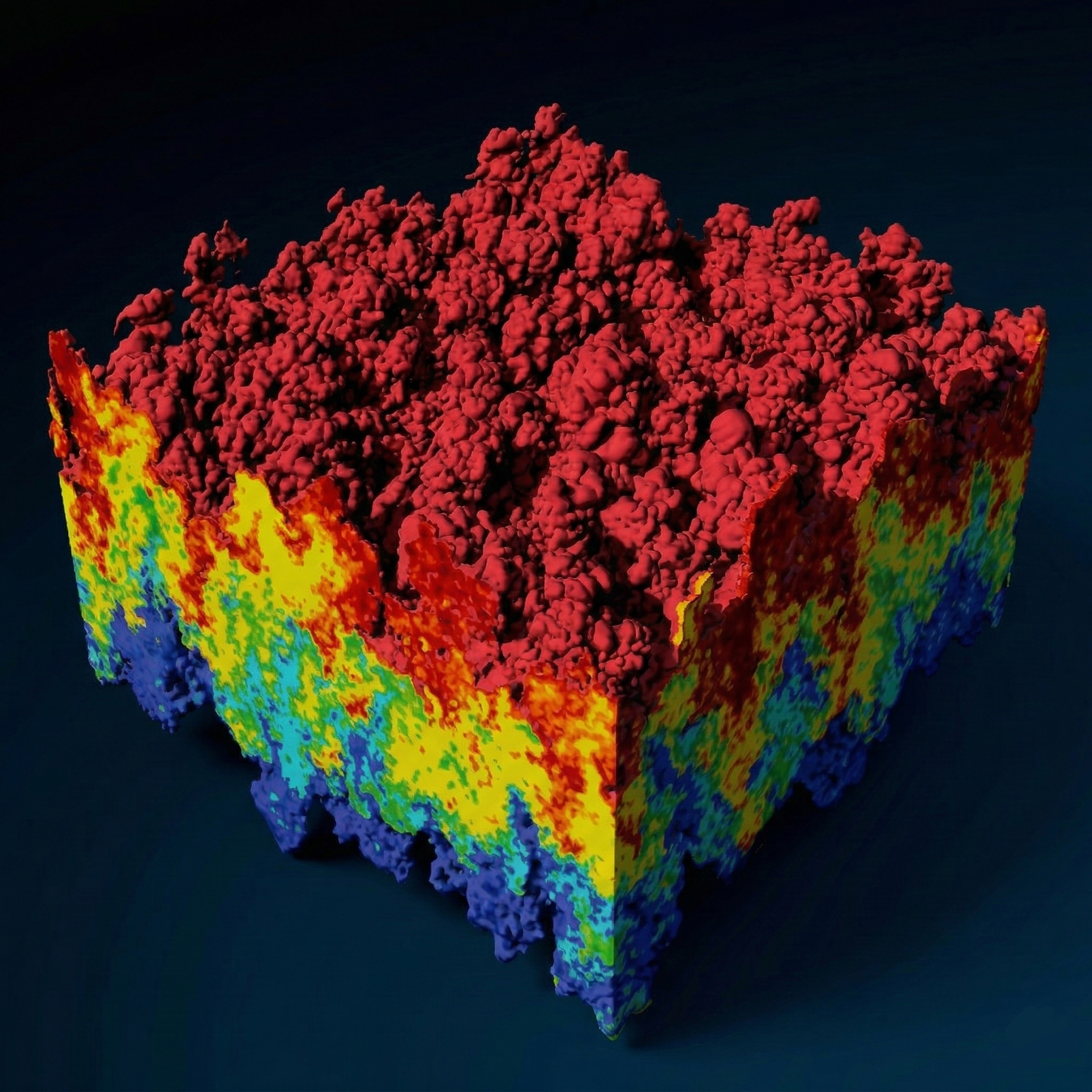
Portfolio Risk & Monte Carlo VaR Engine
A quantitative risk engine that simulates tens of thousands of stochastic price paths to calculate Value at Risk (VaR) and Expected Shortfall (CVaR) for multi-asset portfolios. Built to assess non-linear portfolio payoffs under severe market stress scenarios.
- 01. Stochastic path generation via Geometric Brownian Motion
- 02. Historical and parametric VaR/CVaR computation
- 03. Implementation of variance reduction techniques
Options Mispricing & Volatility Surface Engine
An advanced derivatives pricing model that constructs 3D implied volatility surfaces from raw options chain data. Designed to identify local mispricings and volatility skews using numerical interpolation and rigorous calculation of the Black-Scholes Greeks.
- 01. Implied volatility root-finding (Newton-Raphson method)
- 02. Cubic spline interpolation for surface construction
- 03. Delta-neutral hedging metrics and Greeks calculation


Market Regime Detection Engine
A statistical inference model built to identify underlying structural shifts in market volatility and return distributions. Utilizes unsupervised machine learning algorithms to classify distinct market phases, allowing for dynamic, regime-aware risk adjustments.
- 01. Hidden Markov Models (HMM) for unobserved state classification
- 02. Gaussian Mixture Models for distribution clustering
- 03. Dynamic portfolio weighting based on detected regime shifts
STAY SYNCHRONIZED.
Open for research collaborations, trading discussions,
and internship opportunities in quantitative finance.